TL;DR: Sewage backup cleanup in Woodbridge, VA typically costs $1,500 to $15,000 or more, depending on how much of the home the water reached and how many porous materials (carpet, drywall, subfloor) need to come out. Category 3 water costs more than a clean-water loss because it requires full PPE, removal rather than drying of affected porous materials, antimicrobial treatment, and clearance testing before the space is considered safe to rebuild. Most standard homeowners policies do not cover sewer or sump backups unless a water backup endorsement was added.
If sewage is backing up through a floor drain or toilet in your Woodbridge basement right now, you’re probably trying to figure out two things at once: how bad is this going to be, and what is it going to cost. The honest answer is it depends on how far the water traveled and what it touched, but the pricing pattern is predictable enough to give you real numbers before a technician walks in the door.
How much does sewage backup cleanup cost in Woodbridge, VA?
Most sewage backup cleanups in the Woodbridge area fall between $1,500 for a contained, single-fixture backup and $15,000 or more for a finished basement with extensive material removal. The total depends on square footage affected, how many porous materials need to be discarded, and whether the source is resolved or still active.
| Scenario | Typical Cost Range |
|---|---|
| Single bathroom, contained backup, minimal materials affected | $1,500 - $4,000 |
| Finished basement, carpet and baseboard removal | $4,000 - $8,000 |
| Whole-level backup, drywall and subfloor removal required | $8,000 - $15,000+ |
| Antimicrobial treatment and post-remediation clearance testing | $500 - $1,500 (often bundled into the job) |
| Plumbing repair to the source line (private lateral) | Separate from cleanup, often $3,000 - $25,000 depending on depth and length |
These are typical industry ranges for the Prince William County area, not a quote. Every loss is different, and a written scope of work, with room-by-room pricing, should come before any demolition starts.
Why does Category 3 water cost more to clean up than a clean-water loss?
Category 3 water, the industry term for grossly contaminated water such as sewage, costs more because it requires removal instead of drying, full PPE, and antimicrobial treatment that a clean-water loss simply doesn’t need. A burst supply line might let a crew dry carpet pad in place; sewage backing up through that same carpet pad means it gets cut out and bagged.
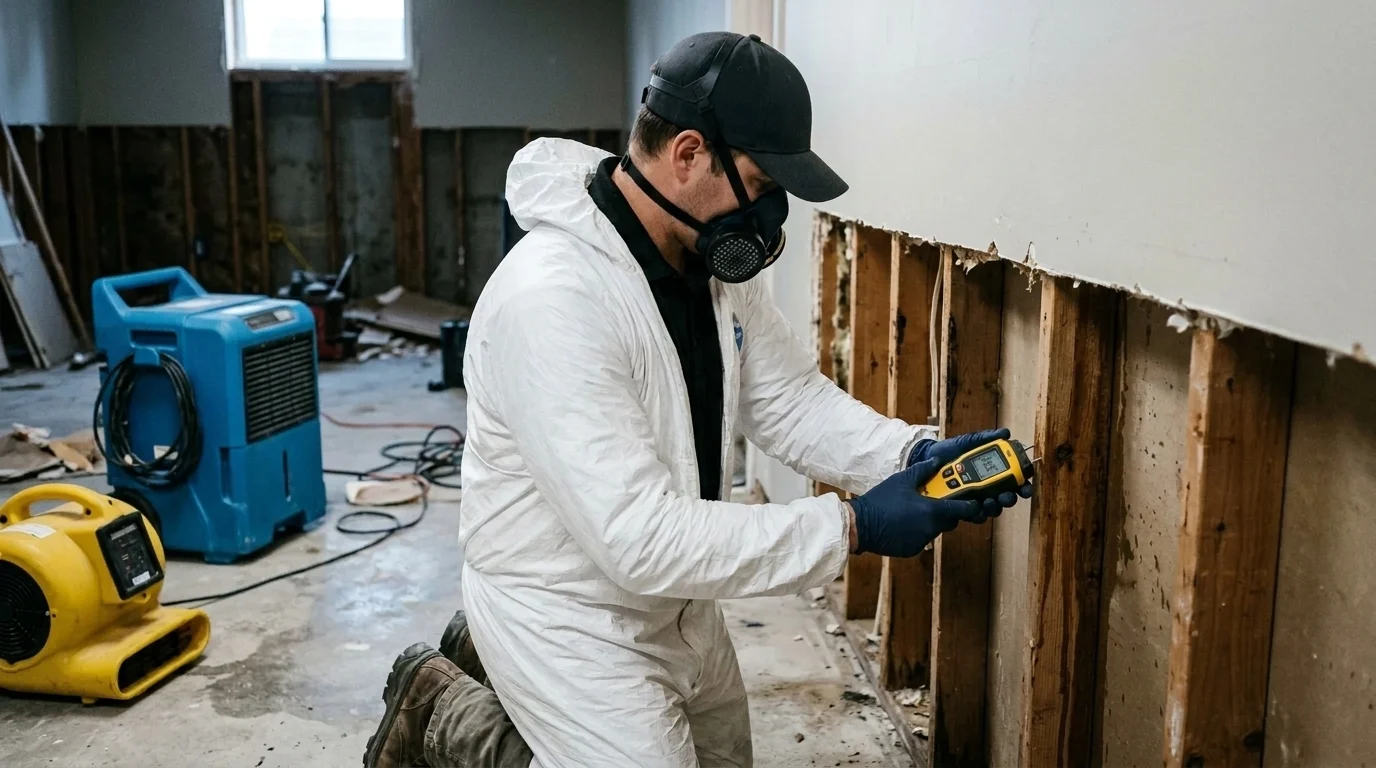
Under the ANSI/IICRC S500 standard, any sewer or drain backup is classified as Category 3, regardless of how it looks on the surface. That classification drives three cost factors: technicians work in Tyvek suits, respirators, and double gloves rather than standard coveralls; porous materials that absorbed the water (carpet, pad, drywall up to the waterline, insulation) get removed rather than dried; and the space gets treated with an EPA-registered antimicrobial and typically re-tested before contents or rebuild materials go back in. Skipping any of those steps is how a cheap cleanup becomes an expensive callback.
Does homeowners insurance cover a sewage backup in Virginia?
A standard homeowners policy usually does not cover a sewer or sump pump backup unless the homeowner purchased a separate water backup (sewer/sump) endorsement. This catches a lot of Woodbridge homeowners off guard, because the same policy that covers a burst pipe often excludes this exact scenario by default.
If that endorsement is on the policy, the claim typically covers cleanup, material removal, and rebuild up to the endorsement’s limit, which is often lower than the dwelling coverage itself ($5,000 to $25,000 is common). If it’s not on the policy, cleanup is out of pocket unless the backup can be tied to a municipal line failure, which is a separate claim against the utility, not the homeowner’s insurer. Either way, document everything with photos before cleanup begins, keep every receipt, and ask for a written scope that itemizes what was removed and why. The Insurance Information Institute has a plain-language breakdown of what standard policies typically do and don’t cover. Our guide to homeowners insurance and water damage walks through how adjusters typically evaluate these claims.
Is the backup coming from the municipal line or my private lateral?
If only your house is backing up and the neighbors aren’t affected, the problem is almost always on your private lateral, the pipe between your home and the public sewer main, which is the homeowner’s responsibility to repair. If multiple homes on the street are backing up at the same time, especially after heavy rain, that points to a municipal main issue, which falls to the local utility.
This distinction matters for cost because the cleanup itself is billed the same either way, but who pays for the plumbing repair that caused it differs. A camera inspection of the lateral, something a licensed plumber performs separately from cleanup, is the only reliable way to tell a root intrusion or collapsed pipe in your lateral from a municipal capacity problem during a storm.
What happens during a sewage cleanup, step by step?
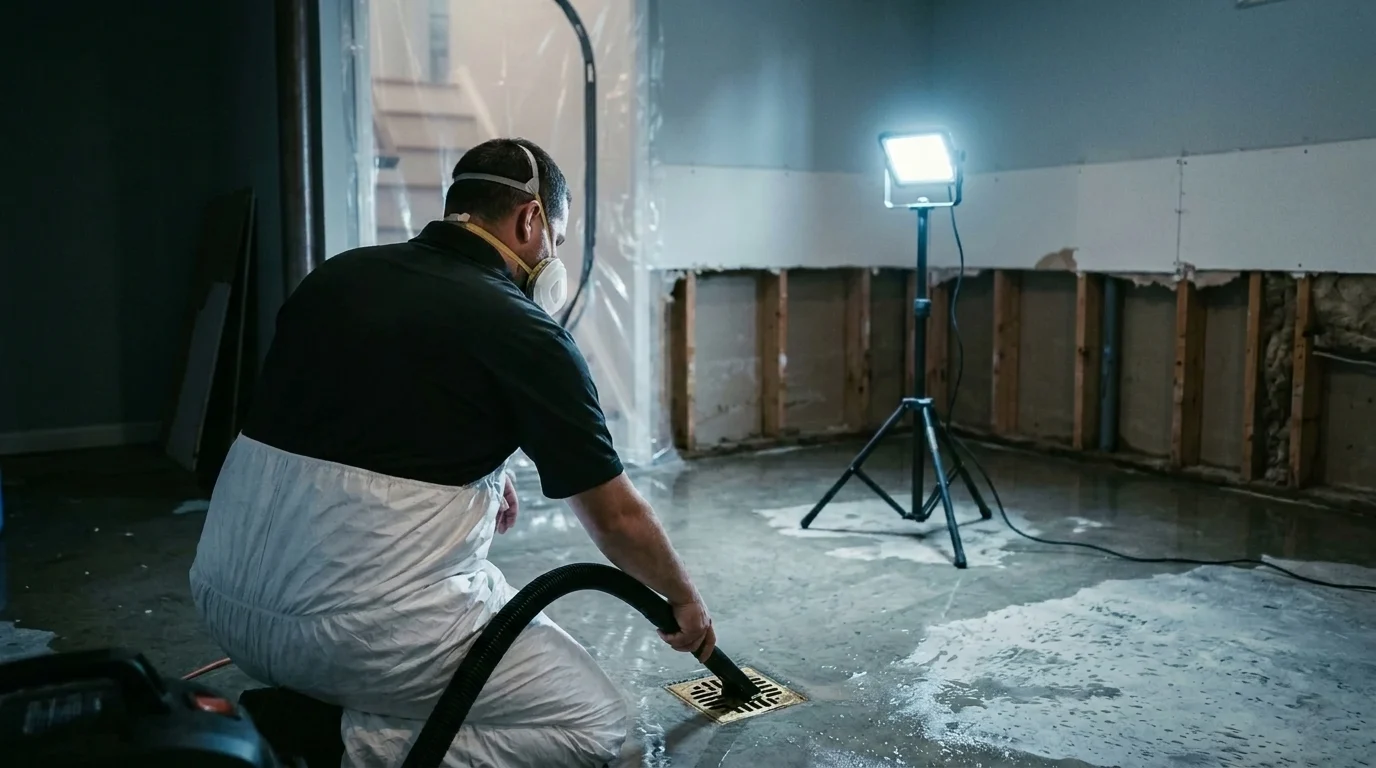
A sewage cleanup typically moves through four phases: containment and extraction, material removal, drying and antimicrobial treatment, and clearance testing before rebuild. Each phase has to finish before the next one starts, which is part of why these jobs take a few days rather than a few hours.
- Containment and extraction. Standing water is pumped or extracted first, with the work area isolated from the rest of the home to limit contaminant spread.
- Material removal. Carpet, pad, baseboards, and drywall up to the affected height are cut out and bagged for disposal, following Category 3 protocol.
- Drying and antimicrobial treatment. Remaining structural materials are dried with air movers and dehumidifiers, then treated with an antimicrobial to address bacteria left behind.
- Clearance testing and rebuild. Once the space meets drying and cleanliness benchmarks, reconstruction, new drywall, flooring, trim, can begin.
In Woodbridge and nearby areas like Lake Ridge and Dale City, where a lot of homes have finished basements below grade, this fourth phase often overlaps with general reconstruction work, since the same crew handling demolition is usually best positioned to handle the rebuild.
If the water is still active or you’re not sure whether it’s contained, that’s the moment to call a restoration company rather than start cleanup yourself. In Woodbridge, a company like 24/7 restoration Inc, which holds IICRC Water Restoration Technician certification and operates on a 24/7 basis, can assess the source, contain the area, and start the documentation an insurance claim needs on the same visit.
For homes with an active leak feeding into the backup rather than a sewer issue, the cleanup approach is different; our water damage restoration guide covers what changes when the source is clean or gray water instead of sewage.
About 24/7 restoration Inc
24/7 restoration Inc is an IICRC Certified Firm based in Woodbridge, VA, licensed under number 2705199581, holding a 5.0 Google rating across 64 reviews. The company’s technicians carry IICRC Water Restoration Technician (WRT) and Applied Microbial Remediation (AMRT) certifications and work OSHA-trained protocols. It handles water damage restoration, sewage cleanup, general contracting, and reconstruction across Woodbridge, Dale City, Manassas, and the greater Prince William County area.
Need help now? Call 24/7 restoration Inc at (703) 727-0385.
Video Transcript
Sewage backing up through a floor drain or toilet in your Woodbridge basement? Before you panic about cost, here’s what actually drives the price. Most sewage cleanups run $1,500 to $15,000, depending on square footage, how many materials got soaked, and whether the source is fixed. Why does sewage cost more than a burst pipe? It’s classified Category 3, contaminated water that can’t just be dried, only removed. Crews suit up in full protective gear, cut out soaked carpet, drywall, and insulation, then treat everything with antimicrobial spray. Here’s the catch: most standard homeowners policies don’t cover sewer or sump backups unless you added a specific water backup endorsement. Only your house backing up? That’s usually your private lateral line, your responsibility. Multiple homes affected points to the municipal system. Cleanup follows four steps: extraction, removing damaged materials, drying and disinfecting, then clearance testing before anything gets rebuilt. Skipping any step risks mold and costly callbacks, photo documentation and a written scope protect you every time. Your contractor handles the camera inspection, the paperwork, and the cleanup, so you’re not guessing through an already stressful situation. Don’t wait on a Category 3 loss. Call 24/7 restoration Inc at (703) 727-0385 for a free estimate.