TL;DR: Sewage backup is Category 3 water, also called black water, and it carries bacteria, viruses, and parasites that make it unsafe to clean up with household supplies. Shut off water use, keep people and pets away from the area, and call a licensed restoration company for extraction, disinfection, and drying. Most homeowners policies cover sewage backup only if you carry a sewer/drain backup endorsement, so check your declarations page before you assume you’re covered.
If you just walked into a Woodbridge basement or bathroom and found standing water with a sewage smell, you’re dealing with something different from a burst pipe. Maybe it backed up through a floor drain after heavy rain overwhelmed the sewer line, or a tree root finally choked off the lateral line running out to the street. Either way, this isn’t a mop-and-towels job. Sewage cleanup and remediation means removing contaminated water and materials, disinfecting everything the water touched, and drying the structure to prevent mold, all according to the standards set by the IICRC.
What Should You Do First When Sewage Backs Up?
Stop using water in the house and keep everyone, including pets, out of the affected area until it’s been assessed. Running a dishwasher, flushing a toilet, or doing laundry can push more waste back into the backup if the blockage is in the main line.
Turn off HVAC systems if the sewage is near a return vent, since air handlers can pull contaminated particles through the ductwork. Don’t try to vacuum or mop it up yourself. Wastewater at this level can carry E. coli, hepatitis A, and parasites, and the EPA classifies it as a serious health hazard that requires PPE most households don’t have on hand: rubber boots, nitrile gloves, and in many cases a respirator.
If the backup is coming from a municipal line rather than your own lateral, Prince William County’s utility department needs to know too, since a main line blockage affecting multiple homes is handled differently than a single-property clog.
How Is Sewage Cleanup Different From Regular Water Damage?
Sewage cleanup requires full removal and disposal of porous materials the water touched, not just drying, because Category 3 water cannot be sanitized once it’s soaked into carpet, pad, or drywall. A burst supply line is clean water you can often dry in place. Sewage never gets that option.
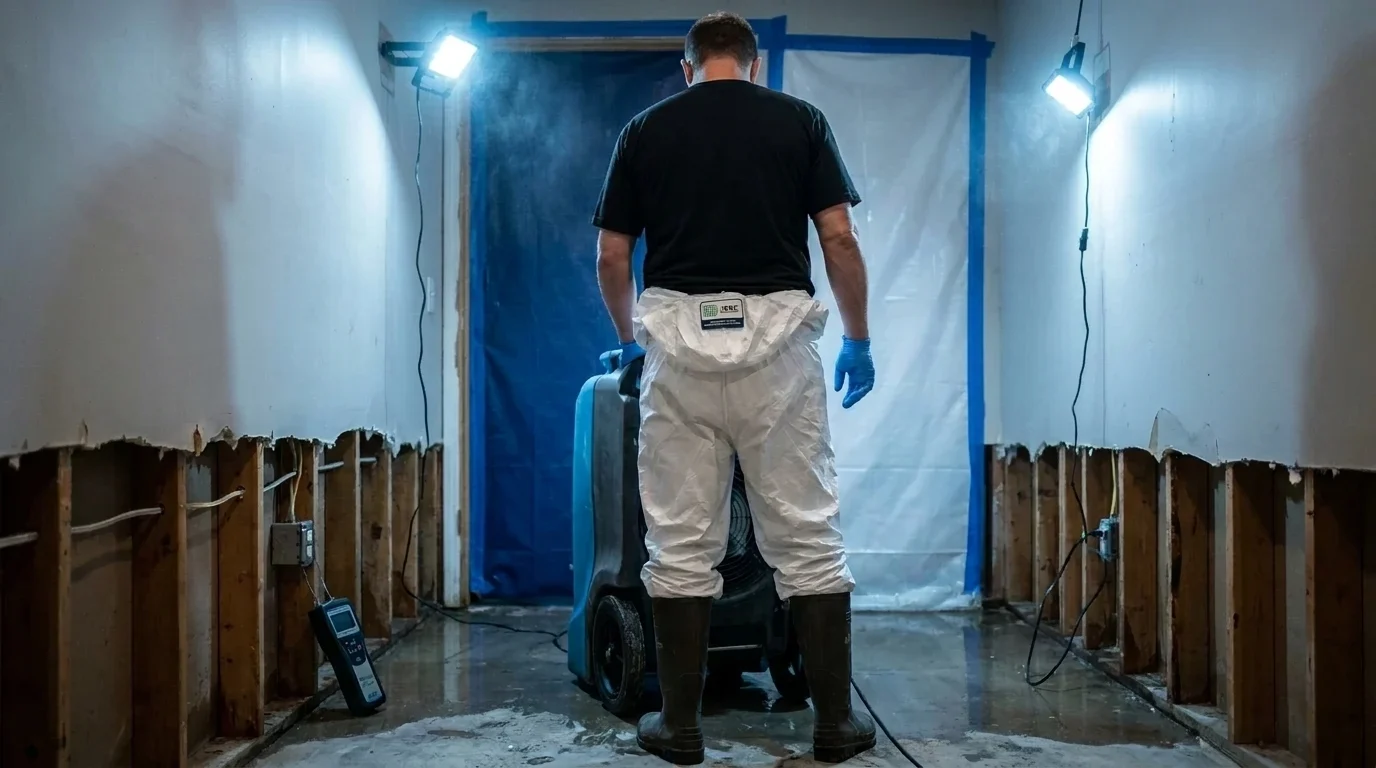
That means carpet and carpet pad in the affected rooms usually get cut out and bagged for disposal, along with drywall up to the waterline (and sometimes higher, if it wicked). Baseboards come off. Any insulation that got wet is removed. What’s left, studs, subfloor, concrete, gets cleaned with an EPA-registered antimicrobial and then dried with air movers and a dehumidifier, monitored with a moisture meter until readings return to a dry standard.
This is a meaningfully bigger scope than a typical water damage call, and it’s worth understanding going in so you’re not surprised by the demolition.
What Does Professional Sewage Cleanup and Remediation Involve?
Professional sewage remediation follows a set sequence: contain the area, extract the contaminated water, remove unsalvageable materials, disinfect, then dry and verify. Each step has a reason behind it, not just a checkbox.
- Containment - plastic sheeting isolates the affected area so contamination doesn’t track through the rest of the home.
- Extraction - a truck-mounted or portable extractor pulls standing water out fast, before it spreads further or soaks deeper into flooring.
- Demolition - contaminated carpet, pad, drywall, and insulation are removed and bagged per standard disposal practice.
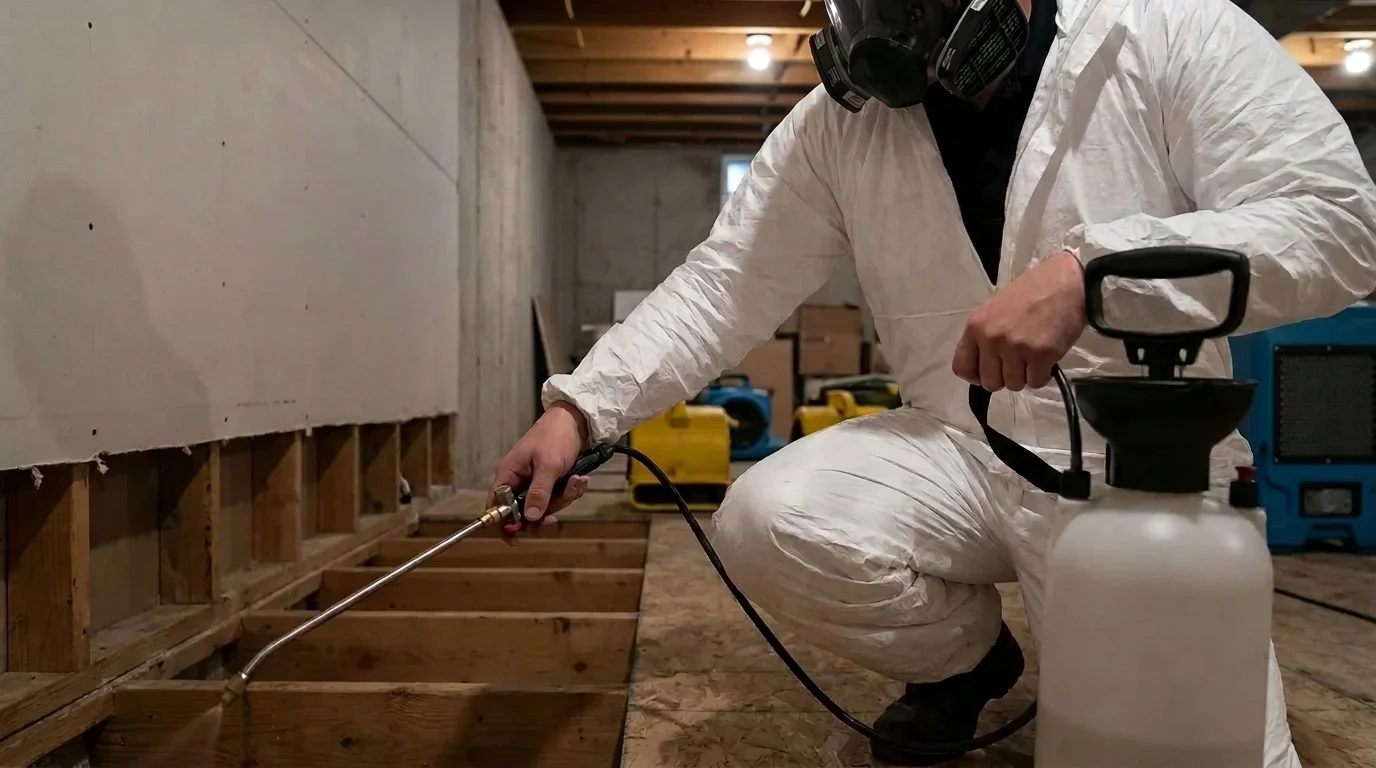
- Disinfection - every hard surface the water touched gets treated with an EPA-registered antimicrobial, not just wiped down.
- Structural drying - air movers and a commercial dehumidifier run until a final moisture check confirms the subfloor and framing are dry.
Our crews at 24/7 restoration Inc follow this same sequence on sewage calls across Woodbridge, Lake Ridge, and Dale City, whether it’s a single bathroom backup or a flooded basement near the Occoquan.
Will Homeowners Insurance Cover Sewage Cleanup?
Most standard homeowners policies exclude sewer and drain backup unless you’ve added a specific endorsement for it, so coverage depends on what’s on your declarations page, not your base policy. If you have that rider, it typically covers the cleanup, disposal, and rebuild, often with its own sub-limit separate from your main dwelling coverage.
If the backup originated from a municipal main rather than your own lateral line, the county or a liability claim against the utility may come into play instead of your own policy. Either way, document everything before cleanup starts: photos of the standing water, the source if you can identify it, and a list of affected materials. A written scope of work from the company doing the cleanup gives the adjuster something concrete to work from. If you’re still untangling what your policy covers after any kind of water loss, our guide to homeowners insurance and water damage walks through how adjusters typically evaluate these claims.
What Happens If You Wait to Clean Up Sewage?
Waiting even a day or two lets contaminated water wick further into subfloor and framing, and gives bacteria and mold a head start you can’t easily undo. Category 3 water that sits long enough can turn a one-room job into a multi-room demolition.
Humidity from standing sewage also spreads past the immediate area through HVAC systems and wall cavities, which is part of why professional crews isolate the space before they start removing anything. The first 24 to 48 hours matter more here than with almost any other kind of water loss. If you’re dealing with any active water event right now, our first-24-hours checklist covers the immediate steps while you wait for a crew.
If you’re facing a sewage backup in Woodbridge or anywhere in Prince William County, the safest move is to stop using water, keep the area closed off, and schedule a sewage cleanup assessment rather than attempt the removal yourself.
About 24/7 restoration Inc
24/7 restoration Inc is an IICRC Certified Firm serving Woodbridge, VA and the surrounding Northern Virginia region, licensed and insured under license #2705199581. The crew holds IICRC WRT (water) and AMRT (mold) certifications, is OSHA trained, and is EPA Lead-Safe certified. Their service lines cover water damage restoration, sewage cleanup, emergency water cleanup, and general contracting for rebuild work. The company maintains a 5.0 Google rating across 59 reviews and operates on a 24/7 schedule.
This post was written with input from the 24/7 restoration Inc team.
Need help now? Call 24/7 restoration Inc at (703) 727-0385.