
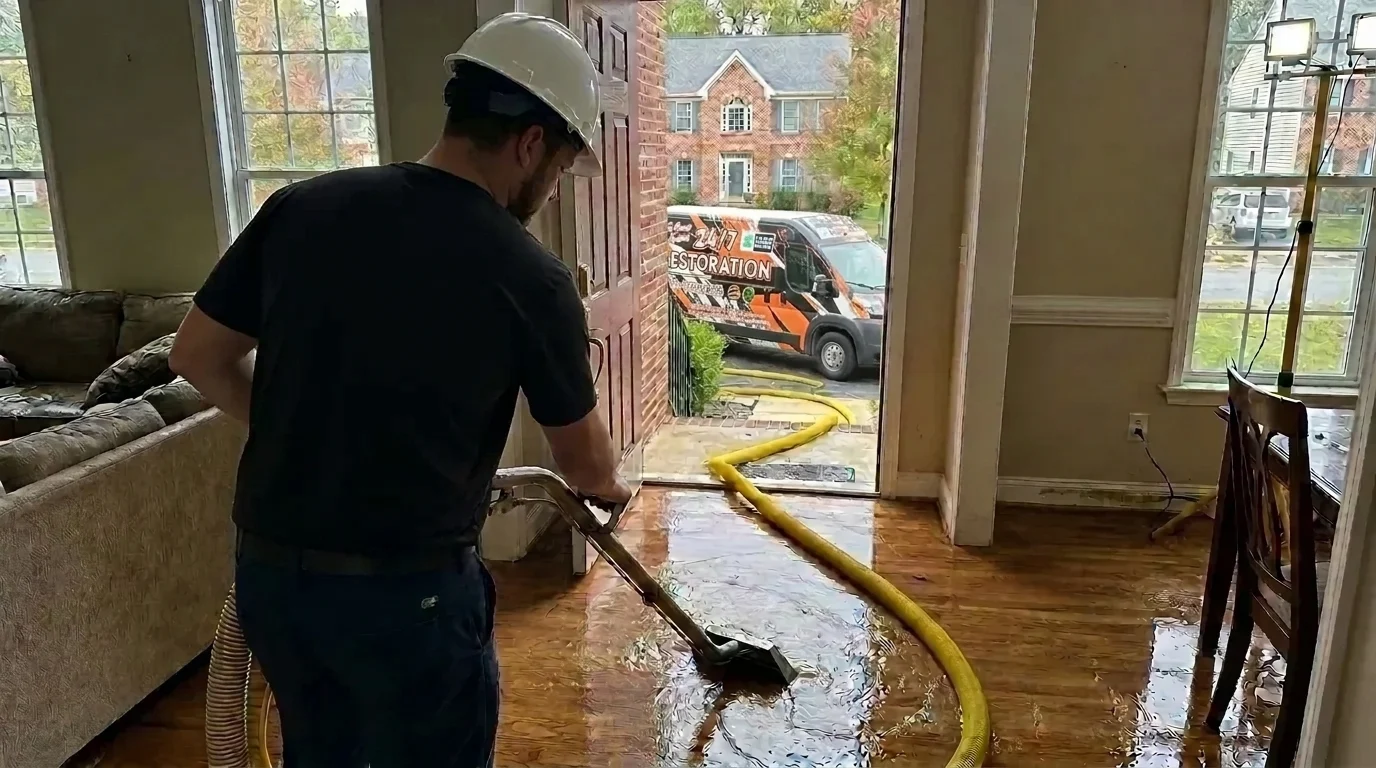
24/7 Emergency Flood Damage Restoration in Woodbridge
24/7 emergency flood damage restoration in Woodbridge and surrounding areas. IICRC-certified, insurance billing accepted. Call (703) 727-0385.
Flood damage in Woodbridge? Call now, we answer 24/7. When the Occoquan or Neabsco Creek overflows, or when a sump pump fails during a hard rain, water doesn’t wait for business hours and neither do we. Standing water starts wicking into drywall and subflooring within hours, and the clock on mold colonization starts almost immediately. The faster a licensed crew gets extraction equipment running, the less demolition you’re looking at on the back end.
What flood damage restoration actually involves
Flood damage restoration is a different animal from a simple appliance leak or a burst supply line. Floodwater is almost always Category 2 or Category 3, meaning it’s carrying silt, sewage backflow, lawn chemicals, or groundwater contaminants, not clean tap water. That changes the scope: porous materials that touched that water (carpet pad, baseboards, drywall below the flood line, insulation) usually can’t be dried and saved, they have to come out. Crews work with truck-mounted extraction units for standing water, then move to low-grain-refrigerant dehumidifiers and axial air movers to bring structural moisture down to a stable range. On a typical single-story flood loss, extraction happens same-day and structural drying runs several days to just over a week, depending on how much water got into wall cavities and how porous the flooring and subfloor are.
Our process
- Water categorization and safety check. Before anyone touches equipment, we identify the water source and category, since sewage-contaminated or groundwater floods require different PPE and disposal protocols than a clean water loss.
- Bulk water extraction. Standing water gets pulled out with truck-mounted or portable extraction units, prioritizing rooms where water depth and dwell time are highest.
- Controlled demolition of unsalvageable materials. Flood-cut drywall, wet insulation, and ruined carpet pad are removed to the height the water actually reached, not guessed at, so hidden moisture doesn’t get sealed behind new finishes.
- Drying and daily moisture monitoring. Air movers and dehumidifiers are set per IICRC S500 drying principles, and moisture content in studs, subfloor, and flooring is logged daily with a moisture meter until readings hit dry standard.
- Antimicrobial treatment and containment where needed. Where floodwater carried contamination, affected surfaces get treated and, in heavier losses, isolated with poly containment so the rest of the house stays usable while drying finishes.
What separates a good flood response from a bad one
The most common mistake in flood cleanup is drying over contamination instead of removing it. A crew that just sets fans on wet carpet without checking water category is gambling with indoor air quality and with whether an adjuster will approve the claim later. Another frequent miss: stopping moisture checks too early because surface materials “feel dry” while the subfloor or wall cavity underneath is still saturated, which is exactly how hidden mold gets started weeks after the visible cleanup is done. Adjusters reviewing flood claims typically want daily moisture logs, photos of the water line on walls before demolition, and documentation of the water category, so a written scope and dated moisture readings matter as much as the physical work.
What does flood damage restoration cost?
Costs vary with water category, how far the water traveled, and how much demolition is required, so every estimate starts with an on-site assessment and a written scope before any work begins. Homeowners insurance often covers flood-related water damage when it originates from a covered peril like a burst pipe or appliance failure, but losses from rising exterior floodwater typically require a separate flood policy, so it’s worth confirming your coverage type before cleanup starts.
Seasonal & regional considerations
Woodbridge sits along the Occoquan watershed, and the area’s mix of older slab homes and newer basement construction means flood risk looks different street to street. Spring thaw and summer thunderstorm season bring the heaviest flood calls, while winter freeze-thaw cycles can crack foundations and set up spring seepage. Homes near Neabsco Creek and low-lying parts of Prince William County tend to see recurring groundwater intrusion during multi-day rain events, which is worth flagging to your insurer if it’s a repeat issue.
Service area
Based in Woodbridge, we respond to flood damage calls throughout Prince William County and nearby communities including Dale City, Lake Ridge, Dumfries, and Manassas.
If water is actively standing in your home right now, don’t wait for it to recede on its own. Call (703) 727-0385 to schedule your flood damage assessment and get extraction equipment on-site before the damage spreads further into your walls and flooring.
Frequently Asked Questions
Does homeowners insurance cover flood damage restoration?
How do you know if floodwater is contaminated?
Why does flooded carpet usually need to be replaced instead of dried?
How long does structural drying take after a flood?
What should I do with my belongings while flood cleanup is happening?
Looking for the best flood damage clean up company in Woodbridge?
24/7 Restoration INC. provides licensed and insured flood damage clean up in Woodbridge, VA and the surrounding area. Customers rate us 5.0 out of 5 stars across 69 Google reviews. We answer calls 24/7 — call (703) 727-0385 for immediate help.
Need Flood Damage Clean Up now?
We respond 24/7 across Woodbridge and surrounding VA cities.