TL;DR: Sewage backup cleanup in Manassas, VA typically costs $750 to $2,000 for a small, hard-surface overflow and $12,000 to $20,000 or more for a finished basement where contaminated carpet, drywall, and insulation have to come out. Category 3 water (sewage) always costs more than clean water because most porous materials it touches get removed rather than dried. Reconstruction to rebuild the space is billed separately from the cleanup and decontamination work.
If a sewer lateral backed up into the finished basement of your Manassas split-level and you’re staring at an estimate wondering why it’s thousands more than the water damage quote a neighbor got last year, the water itself is the difference. A lot of Manassas’s older split-levels and ramblers, built from the 1960s through the 1980s, have finished basements with carpet, wood paneling, and drop ceilings sitting directly in the path of a backed-up lateral. Finished space plus contaminated water is exactly what pushes the number up, and it’s worth understanding before you sign a scope of work.
How Much Does Sewage Backup Cleanup Cost in Manassas, VA?
In Manassas, sewage backup cleanup typically runs $750 to $2,000 for a small, hard-surface overflow and $12,000 to $20,000 or more for a finished basement with contaminated carpet, drywall, and insulation, based on typical pricing for Category 3 water losses in Northern Virginia.
| Scenario | Typical Cost Range |
|---|---|
| Small overflow, hard-surface floor only (bathroom, laundry room) | $750 - $2,000 |
| Single finished room, carpet and pad removed, under 300 sq ft | $2,500 - $5,500 |
| Finished basement, 300-800 sq ft, drywall and flooring removed | $5,500 - $12,000 |
| Finished basement with multiple rooms or HVAC/furnace contamination | $12,000 - $20,000+ |
| After-hours or weekend emergency extraction call-out | Often adds $300 - $800 to the mitigation invoice |
| Full reconstruction (drywall, flooring, trim rebuild) | Typically $15 - $40 per sq ft, billed separately |
These are typical industry ranges, not a quote. Every basement is different, and a written scope after an on-site inspection is the only reliable number for your specific loss.
What Drives the Price Up or Down?
The single biggest factor is how much porous material the sewage touched, because Category 3 water almost never gets dried in place. Under the ANSI/IICRC S500 standard, contaminated carpet, pad, drywall, baseboard, and insulation are generally removed and disposed of rather than cleaned, which is why a sewage loss costs more per square foot than a clean-water pipe break of the same size.
A few other things move the number:
- Square footage affected. More floor area means more extraction, more antimicrobial coverage, and more equipment running longer.
- How long the water sat. A backup discovered within an hour costs less than one found after a weekend away, because contamination and wicking into materials keep spreading.
- Materials in the path. Tile and concrete cost less to address than carpet, hardwood, or finished drywall with insulation behind it.
- Code upgrades triggered during rebuild. If the basement needs a new vapor barrier, updated electrical, or a backflow valve added to the sewer line, that adds to the reconstruction side.
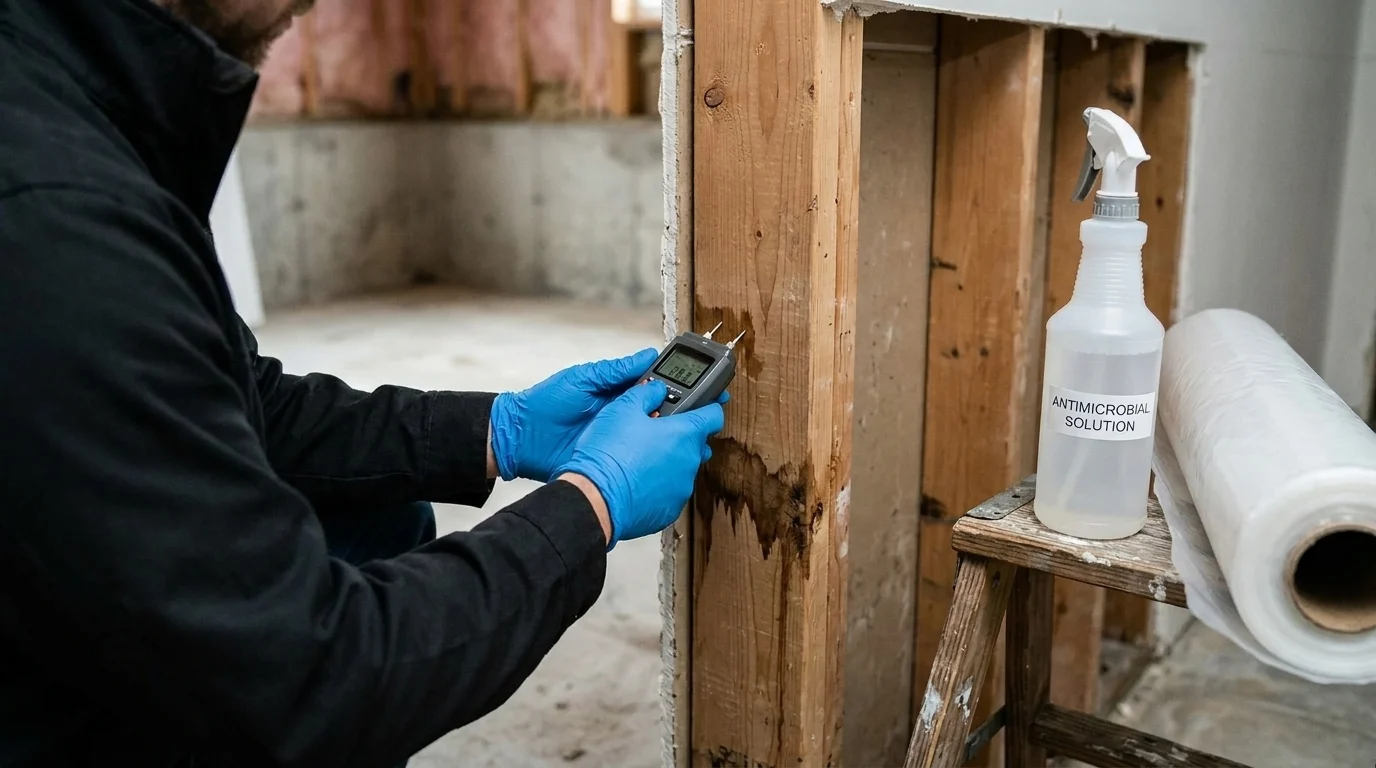
- Equipment days. Dehumidifiers and air movers are typically billed per day until the space hits dry standard, usually confirmed with a moisture meter, not a guess.
What Does Homeowners Insurance Actually Cover?
A standard Virginia homeowners policy typically does not cover a sewer backup or sump pump failure unless you’ve added a water backup, or sewer/sump, endorsement to the policy. Without that endorsement, the cleanup usually comes out of pocket.
This trips people up because a burst supply pipe is usually covered as sudden, accidental water damage, but a backup coming up through a drain or toilet is treated differently by most carriers. If you’re not sure what your policy includes, the Virginia Bureau of Insurance is the state resource for understanding policy language and filing a complaint if a claim is handled unfairly.
If you do have the endorsement, document everything before any material is removed: photos, a written scope, and receipts for equipment and disposal. That paperwork is what protects the claim, and it’s part of what a restoration company should hand you alongside the cleanup itself.
What Happens During a Category 3 Cleanup?
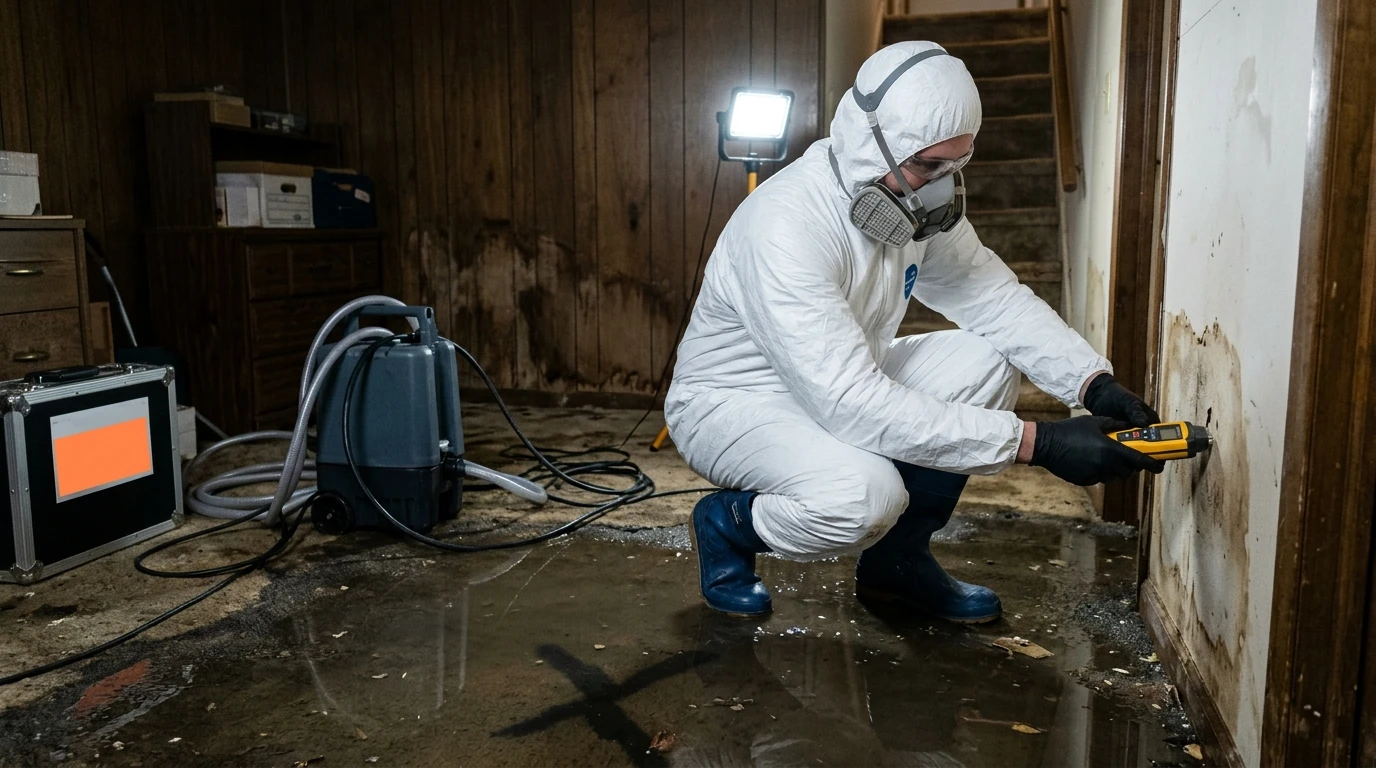
A Category 3 cleanup follows a set sequence: stop the source, extract the water, remove what can’t be salvaged, disinfect, dry, and verify. Skipping steps is how odor and mold problems show up weeks later.
- Stop the source and assess. Confirm the backup has stopped (or get the plumbing issue resolved) and identify how far the water traveled.
- Contain and suit up. Technicians set up containment and wear PPE appropriate to Category 3 water before any extraction begins.
- Extract standing water. Pumps and truck-mounted extractors remove bulk water first.
- Remove contaminated materials. Carpet, pad, affected drywall, and insulation typically come out rather than get dried, per IICRC guidance.
- Clean and disinfect. Remaining hard surfaces and framing get antimicrobial treatment.
- Dry and monitor. Air movers and dehumidifiers run until moisture readings confirm the structure is dry, not a set number of days.
- Clearance and handoff. Once the space tests dry and clean, it’s ready for reconstruction. Our sewage cleanup and remediation guide walks through this process in more detail if you want the longer version.
How Do I Read a Sewage Cleanup Estimate?
A legitimate sewage cleanup estimate separates mitigation (the cleanup and drying) from reconstruction (rebuilding what was removed), and lists materials removed, equipment days, and labor hours as distinct line items.
Look for: a water category and class noted on the form, a list of what’s being removed and why, the number of drying days with daily moisture logs, and antimicrobial application called out separately. If an estimate is a single lump sum with no breakdown, ask for the itemized version before you approve it. Reconstruction, whether it’s new drywall, flooring, or a rebuilt basement wall, should be quoted as its own scope once the dry-out is confirmed, not bundled in with cleanup pricing.
If you’re dealing with a backup right now, a written scope before work starts is the one thing that keeps both the cleanup and the insurance side honest. Call 24/7 Restoration INC. at (703) 727-0385 to schedule an on-site assessment for your Manassas property.
About 24/7 Restoration INC.
24/7 Restoration INC. is an IICRC Certified Firm serving Manassas and the wider Northern Virginia area from its Woodbridge office, licensed under Virginia contractor license #2705199581. The company handles water damage restoration, water cleanup, sewage cleanup, reconstruction, and general contracting, and operates on a 24/7 hours basis. It holds a 5.0 Google rating across 64 reviews.