TL;DR: In Woodbridge, VA, water damage restoration typically runs from $1,200 for a small, caught-early leak up to $15,000 or more for a sewage backup or basement flood that requires demolition and rebuild. The biggest cost drivers are how contaminated the water is, how many square feet got wet, and whether drywall, flooring, or framing need to be torn out. Mitigation (extraction and drying) and reconstruction (rebuild) are usually billed as two separate phases, even when one company does both.
If you just found standing water in a split-level near Lake Ridge or a flooded basement rec room in a Dale City townhome, you want a number before you call anyone. Fair question, and the honest answer is: it depends on how much water, how contaminated it is, and how long it sat before someone pulled out a meter. Below is how the bill actually breaks down, scenario by scenario, so you know what to expect before a crew walks in the door.
How Much Does Water Damage Restoration Cost in Woodbridge, VA?
Most Woodbridge-area water losses fall between $1,200 and $15,000, with the number driven almost entirely by water category and how much demolition it takes to dry the structure properly. A single wet room caught within a day or two sits at the low end. A sewage backup or a basement that sat flooded for a week sits at the high end, often with a separate reconstruction invoice on top.
These are typical industry ranges for the region, not a quote. Every loss is different, which is why 24/7 restoration Inc provides a written scope before any work begins.
| Scenario | Typical Cost Range |
|---|---|
| Single room, clean water (Category 1), caught within 24-48 hours | $1,200 - $3,500 |
| Multi-room clean-water loss, carpet and pad replacement | $3,500 - $7,000 |
| Category 2 “gray water” (washing machine or dishwasher discharge) | $4,000 - $8,500 |
| Basement flooding with drywall and insulation removal | $6,000 - $12,000 |
| Category 3 “black water” (sewage backup, storm flooding) | $8,000 - $15,000+ |
| Water damage requiring structural rebuild (subfloor, framing, drywall) | $15,000 - $50,000+ |
On a per-square-foot basis, mitigation alone (extraction, drying, antimicrobial treatment) typically runs $3.75 to $7.00 per square foot in this region. Add reconstruction, and total cost climbs fast, which is exactly why the two get scoped and billed separately.
What Actually Drives the Price Up or Down?
Three things move the number more than anything else: water category, response time, and how much demolition it takes to dry the structure. Everything else (square footage, number of rooms, materials) is a multiplier on top of those three.
Category of water. Clean water from a supply line costs the least to remediate. Category 2 gray water (appliance overflow, aquarium leak) needs more disinfection. Category 3 black water, which includes sewage backups and anything from outside flooding, requires removing porous materials that touched it and treating the area as a biohazard under the IICRC S500 standard. That jump alone can double the bill.
How long the water sat. Drywall and subflooring start absorbing moisture within hours. Wait past 24-48 hours and mold growth becomes a real risk, which means more material has to come out instead of just drying in place. A split-level in Lake Ridge where someone catches a supply-line leak the same evening costs far less to dry than the same leak discovered a week later after a trip out of town.
Materials affected. Carpet and pad are cheap and fast to replace. Hardwood floors, finished basements, and built-in cabinetry (common in Potomac Mills-area townhomes with finished lower levels) take longer to dry or may need full replacement, which adds both drying days and reconstruction scope.
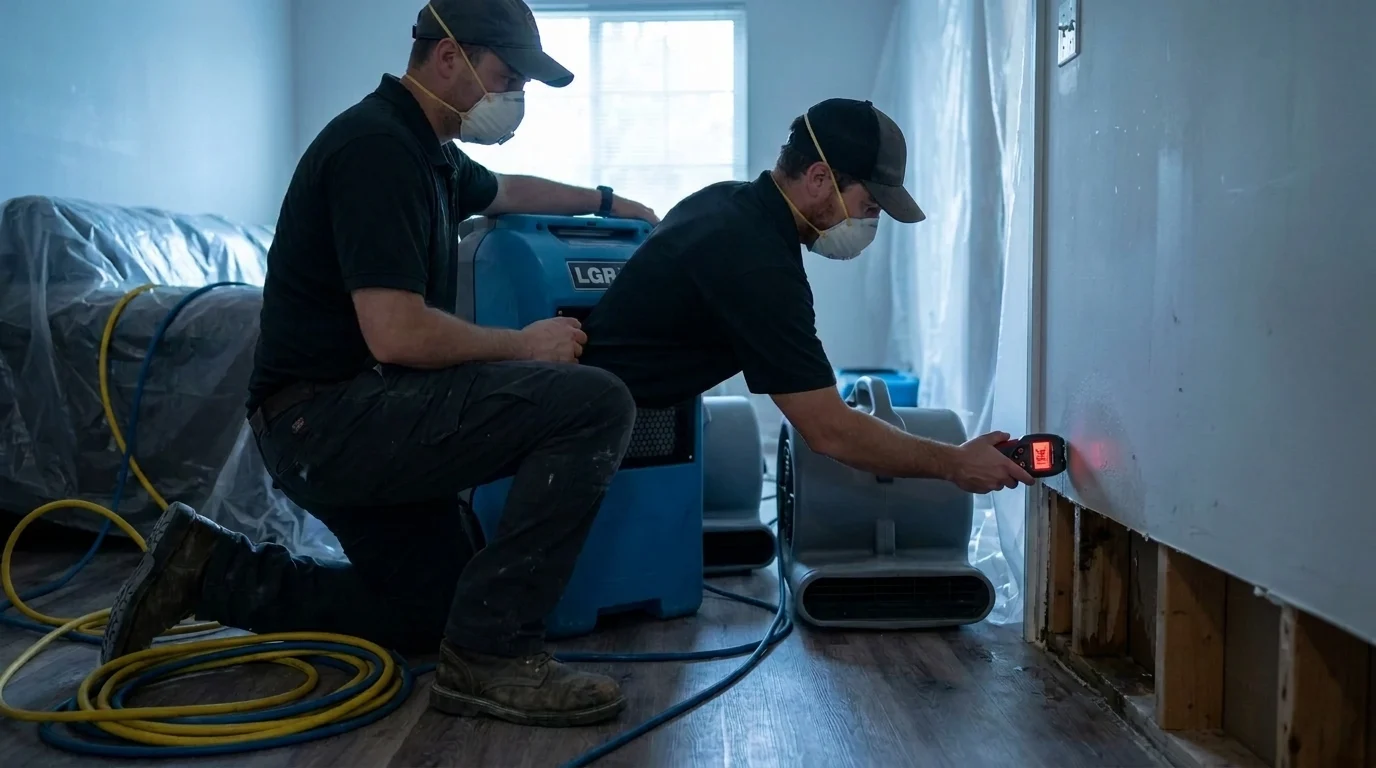
Demolition and drying days. Standard structural drying runs 3-5 days with air movers and low-grain-refrigerant (LGR) dehumidifiers running continuously, per IICRC S500 drying guidelines. Every additional day adds equipment rental and monitoring visits. If wall cavities or subfloor stay wet, technicians have to cut out drywall or pull flooring to dry the structure properly, which shifts cost from the mitigation invoice to the reconstruction one.
Does Homeowners Insurance Cover the Cost?
Most standard homeowners policies cover water damage that is sudden and accidental, like a burst pipe or a failed supply line, but exclude damage from a leak that went on for weeks or from flooding caused by rising water. The Insurance Information Institute breaks down what a standard policy typically includes, and it’s worth reading before you assume either way.
A few things matter for the claim itself: your deductible applies before coverage kicks in, the adjuster will want documented moisture readings and photos from day one, and gradual leaks (a slow drip under a sink for months) are usually denied even when the eventual damage looks dramatic. We cover the claim process and what documentation actually protects a Woodbridge homeowner in our guide to whether homeowners insurance covers water damage.
This is also where the mitigation-versus-reconstruction split matters for your claim. Insurers typically pay the mitigation invoice (extraction, drying, antimicrobial treatment) under the water damage portion of the policy, while reconstruction gets scoped and approved as a separate line item, sometimes requiring its own estimate. A company that documents both phases properly from day one makes that second approval much easier to get through.
What Happens During Water Damage Restoration (and When Does Each Cost Hit)?
Restoration happens in four phases, and the bill arrives roughly in that order. Knowing which phase you’re in tells you what you should be seeing from the crew and what you’re paying for.
- Extraction. Standing water gets pulled out with truck-mounted or portable extraction equipment, usually within the first visit. This is the fastest way to stop ongoing damage.
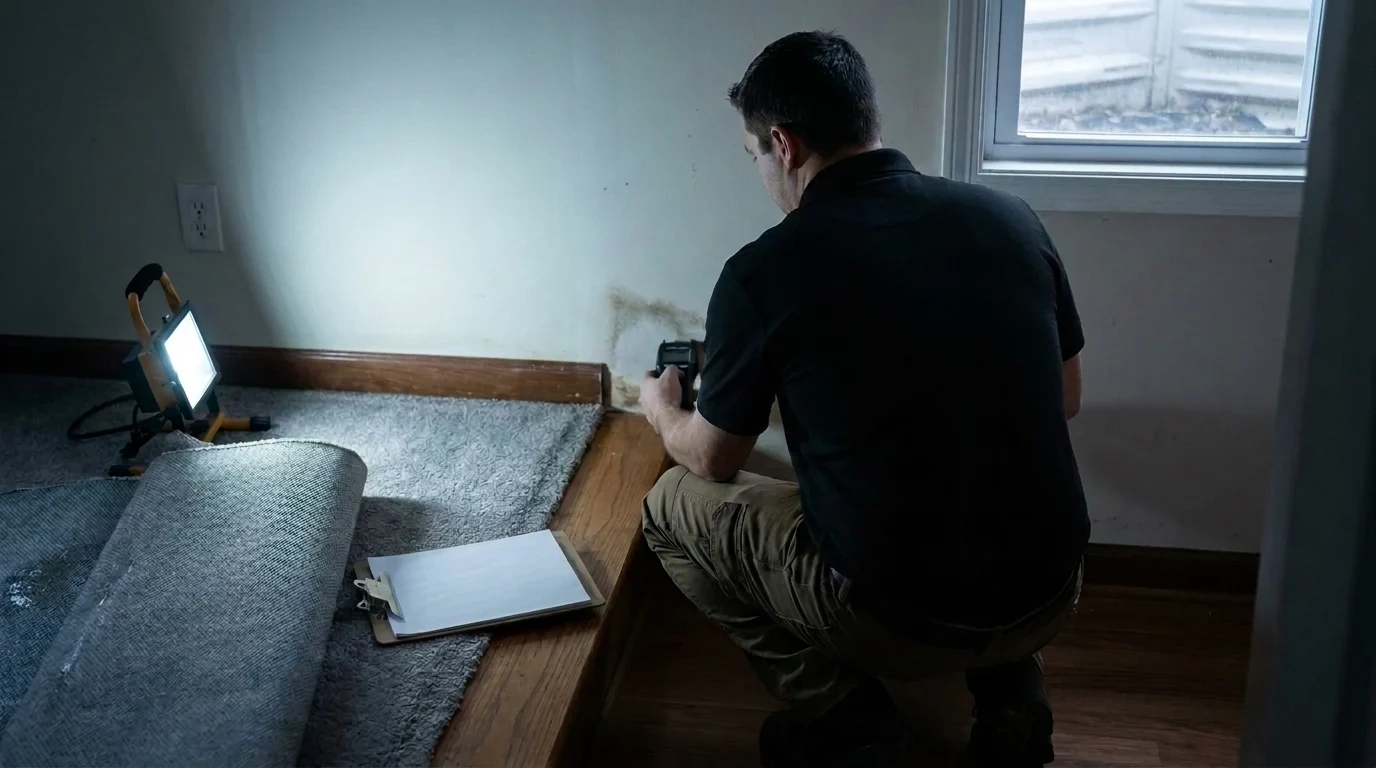
- Drying. Air movers and LGR dehumidifiers run for 3-5 days, with a technician returning to check moisture readings in walls, subfloor, and framing with a moisture meter. Drying isn’t done when it looks dry; it’s done when the meter says so.
- Demolition. Any material that can’t be dried in place (saturated drywall, swollen baseboards, ruined carpet pad) comes out. This is where mold risk gets controlled before it starts.
- Rebuild. Drywall, flooring, trim, and paint get put back. This is reconstruction work, billed and scoped separately from the mitigation phase above, even when the same company handles both.
Having one team carry a job from water cleanup through full water damage restoration and into reconstruction means the drying documentation lines up with the rebuild estimate, which is what insurance adjusters actually want to see.
If you’re staring at a wet floor in Woodbridge right now, the fastest way to get an accurate number is an on-site assessment rather than a phone estimate. A technician with a moisture meter can tell you in minutes whether you’re looking at a $1,500 job or one that needs a full scope. Call 24/7 restoration Inc at (703) 727-0385 to schedule one.
About 24/7 restoration Inc
24/7 restoration Inc is an IICRC Certified Firm based in Woodbridge, Virginia (license #2705199581), serving Prince William County and the wider Northern Virginia region. The crew holds IICRC Water Restoration Technician (WRT) and Applied Microbial Remediation Technician (AMRT) certifications, is OSHA trained, and is EPA Lead-Safe certified. Their work covers water damage restoration, water cleanup, sewage cleanup, reconstruction, and general contracting, and the company answers calls 24/7.