If sewage is backing up through a floor drain or toilet in your Dumfries home right now, here’s the number you actually need: most jobs run $1,500 to $12,000, with whole-level losses and crawl space jobs on the high end. The range is wide because a sewage backup, also called Category 3 or black water under the ANSI/IICRC S500 standard, almost always costs more than a clean-water leak of the same size. Contaminated porous materials get removed, not dried, and that changes the labor and disposal math fast.
Dumfries sits along the Route 1 corridor between Woodbridge and Quantico, with a mix of older rambler-style homes near the Marina and Possum Point that were built over crawl spaces, and newer townhome communities off Dumfries Road with finished basements. Both layouts get sewage backups for the same reasons (a clogged lateral line, tree roots, or a municipal main surcharging during heavy rain), but the cleanup looks different depending on which one you have, which this guide covers below.
How Much Does Sewage Backup Cleanup Cost in Dumfries, VA?
Most Dumfries homeowners pay between $1,500 and $12,000 for sewage backup cleanup, depending on how many rooms are affected and whether flooring, drywall, or insulation has to come out. A single bathroom with hard-surface flooring sits at the low end; a finished basement with carpet, drywall, and HVAC components affected sits at the high end.
| Scenario | Typical cost range |
|---|---|
| Single bathroom, tile or vinyl floor, minimal material removal | $1,500 - $3,000 |
| One bedroom or living area with carpet and pad removed | $2,500 - $5,000 |
| Crawl space backup with vapor barrier and insulation removal | $3,000 - $7,000 |
| Finished basement, multiple rooms affected | $5,000 - $12,000 |
| Whole-level backup with a 2-foot flood cut on drywall | $8,000 - $18,000+ |
These are typical industry ranges for Northern Virginia, not a quote. Every loss is different, and a written scope of work should spell out materials removed, equipment days, and disposal before anyone starts cutting drywall.
What Drives the Price in a Dumfries Home?
The single biggest cost driver is how much porous material has to be removed, not how much water is on the floor. A few inches of sewage-contaminated water in a crawl space with batt insulation can cost more to remediate than twice as much clean water in a finished basement with sealed concrete.
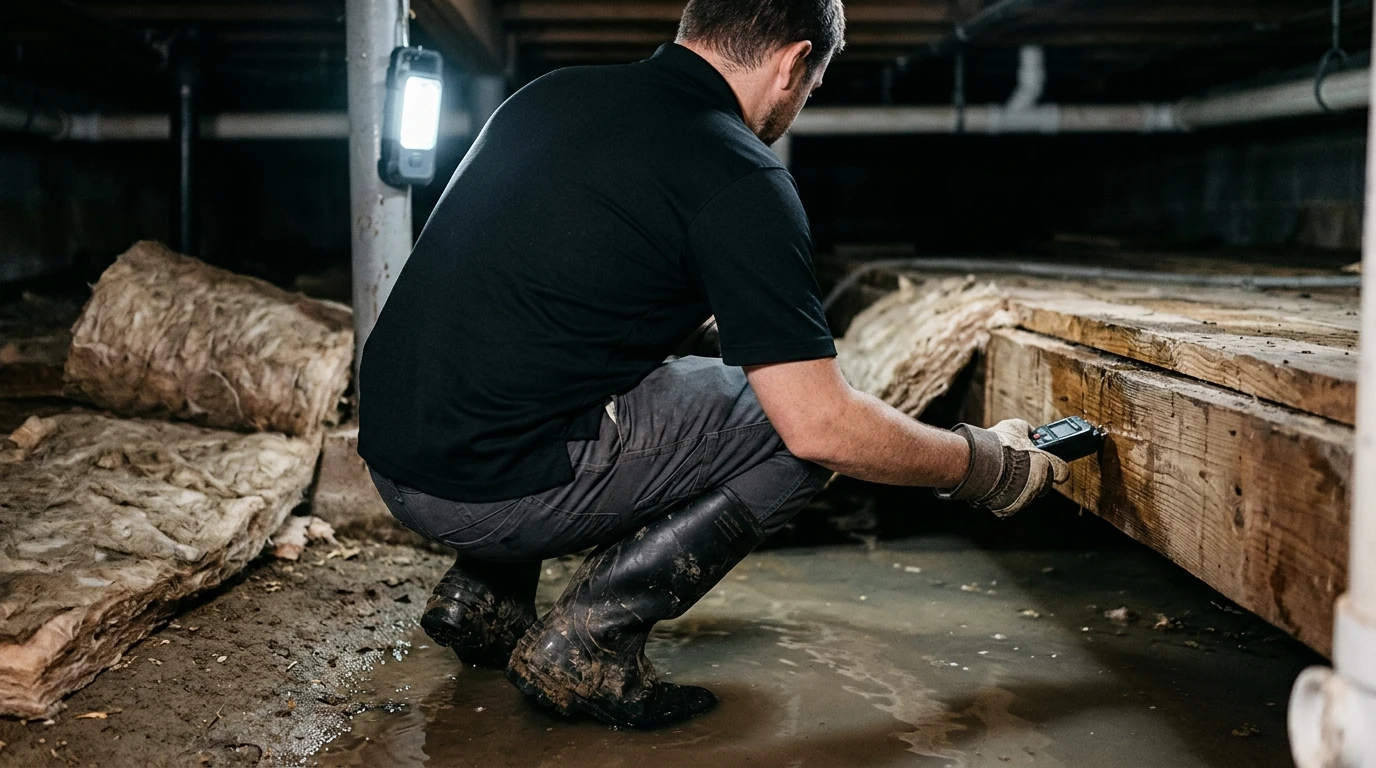
Crawl space vs. basement matters here. Older Dumfries homes near Powell’s Landing and the Marina often sit on crawl spaces with exposed ductwork, batt insulation, and a dirt or vapor-barrier floor. Once sewage contacts insulation or exposed wood framing in a crawl space, those materials typically come out rather than get treated in place, because there’s no way to verify they’re clean afterward. Basements under the newer townhome communities off Possum Point Road usually have finished walls and flooring, which means more visible demolition (carpet, pad, baseboard, and a flood cut on wet drywall) but a more straightforward, open workspace to dry and treat.
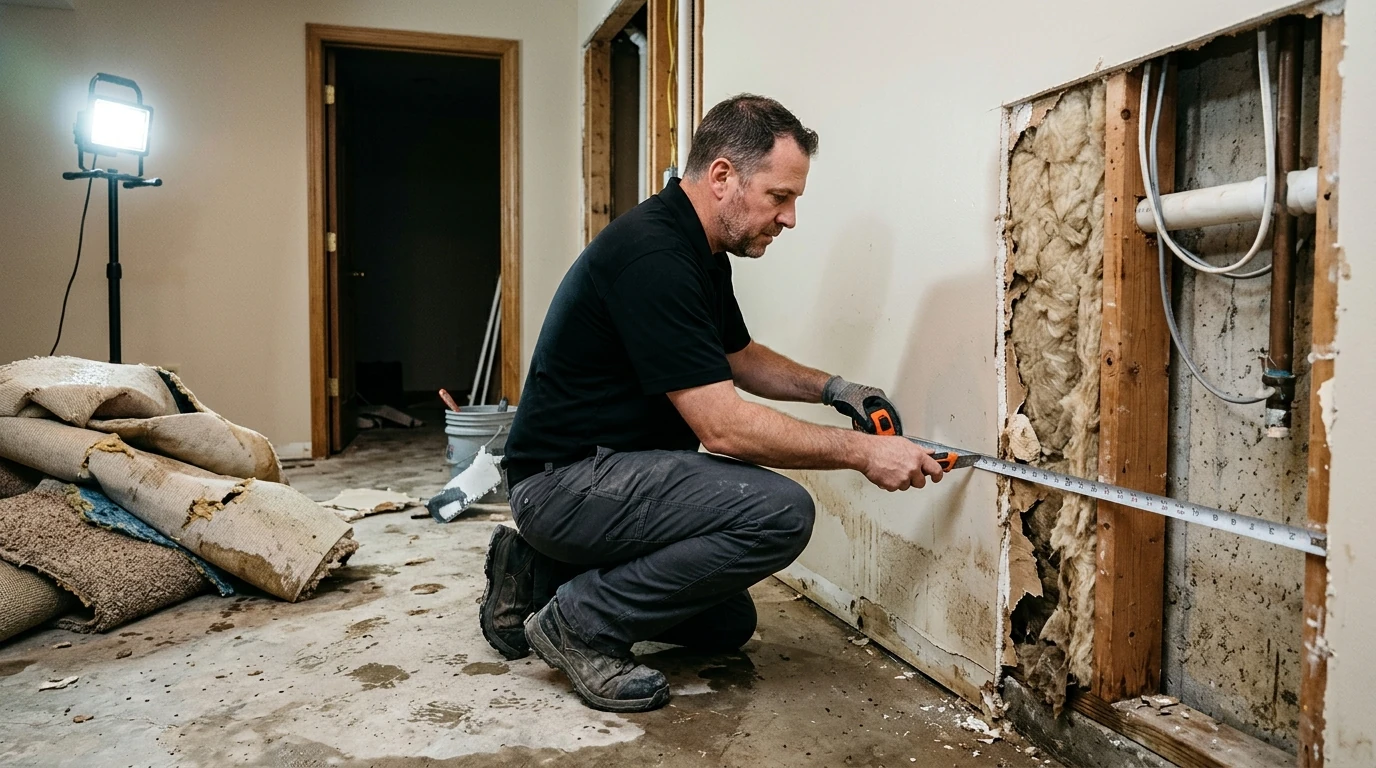
Drywall and carpet pad come out in Category 3 losses because black water carries bacteria, viruses, and other pathogens that soak into absorbent materials and can’t be reliably disinfected once they’re saturated. Carpet pad is almost never salvageable after a sewage event. Drywall gets cut roughly 12 to 24 inches above the visible waterline (a “flood cut”) so the remaining wall cavity can be inspected, treated, and dried without hidden contamination left behind.
Other factors that move the price: how long the water sat before cleanup started (longer dwell time means deeper material saturation), whether the backup affected mechanical equipment like an HVAC air handler or water heater, and how much antimicrobial treatment and air scrubbing the job needs before reconstruction can begin.
Will Homeowners Insurance Cover It in Virginia?
A standard Virginia homeowners policy usually does NOT cover a sewer or drain backup unless a water backup endorsement was added to the policy. This is one of the most common coverage gaps homeowners discover only after the backup happens, and it applies the same way across Virginia, Maryland, and D.C.
If you don’t know whether your policy has that endorsement, your agent or Virginia’s Bureau of Insurance can confirm it. The Insurance Information Institute outlines how standard homeowners coverage is structured and where backup and sump-pump failure typically sit outside the base policy. Our guide to whether homeowners insurance covers water damage walks through the clean-water side of this same question if you want the fuller picture.
When the endorsement is in place, documentation is what protects the claim: photos before anything is removed, a detailed inventory of discarded materials, and a written scope from whoever does the cleanup. 24/7 Restoration INC. documents each job this way so homeowners have what they need when they call it in.
What Happens During Cleanup?
Sewage backup cleanup follows a set sequence, regardless of whether it’s a Dumfries crawl space or a basement rec room:
- Stop the source and extract standing water. The line gets cleared or the source addressed first; extraction starts immediately after.
- Remove contaminated porous materials. Carpet, pad, and affected drywall come out based on contamination depth and dwell time.
- Clean and disinfect remaining surfaces. Hard surfaces and framing get cleaned and treated with an EPA-registered antimicrobial.
- Dry the structure. Air movers and dehumidifiers run until moisture readings confirm the structure is dry, typically several days.
- Verify and rebuild. Once moisture content is within range, reconstruction (drywall, flooring, trim) can start.
Crews working the Route 1 corridor between Dumfries and Woodbridge can usually get on-site quickly given how close the service area is to the shop, which matters because dwell time is the single biggest driver of how much material has to be removed.
Questions to Ask Before You Sign
Before signing a work authorization, ask: Is this a written scope with a not-to-exceed number, or an open-ended time-and-materials job? What specifically gets removed versus cleaned in place, and why? Is there a water backup endorsement on my policy, and will you document the loss for my adjuster? What’s included in the price: equipment rental days, disposal fees, antimicrobial treatment? A contractor who answers these clearly before starting work is usually the one worth hiring.
If sewage is actively backing up in your Dumfries home, Call 24/7 Restoration INC. at (703) 727-0385 to get a crew and a written scope started.
About 24/7 Restoration INC.
24/7 Restoration INC. is an IICRC Certified Firm with a current license (#2705199581) serving Woodbridge, Dumfries, and the surrounding Northern Virginia corridor on a 24/7 basis. Their crews handle water damage restoration, flood damage, sewage cleanup, mold remediation, reconstruction, and related general contracting work across the region, with technicians holding IICRC WRT and AMRT training and OSHA and EPA Lead-Safe credentials.