TL;DR: General contracting for reconstruction and renovation in Woodbridge, VA means rebuilding the parts of a home that were removed during water, flood, or mold mitigation, framing, drywall, flooring, cabinetry, paint, under one contractor instead of juggling separate crews. The right contractor coordinates with your insurance adjuster, pulls the correct Prince William County permits, and hands back a space that’s not just dry or cleaned, but finished.
The drying equipment is gone, the mold remediation sign-off is in your inbox, and now you’re staring at open stud walls in your Woodbridge kitchen or a stripped-down basement in Lake Ridge, wondering who puts it back together. That’s the gap general contracting fills: the mitigation crew stops the damage and removes what can’t be saved, but someone still has to frame, hang drywall, run trim, and get the room back to livable. For homeowners near the Occoquan River or along the I-95 corridor dealing with older housing stock, that rebuild phase is often more involved than people expect.
What does general contracting cover after a reconstruction job?
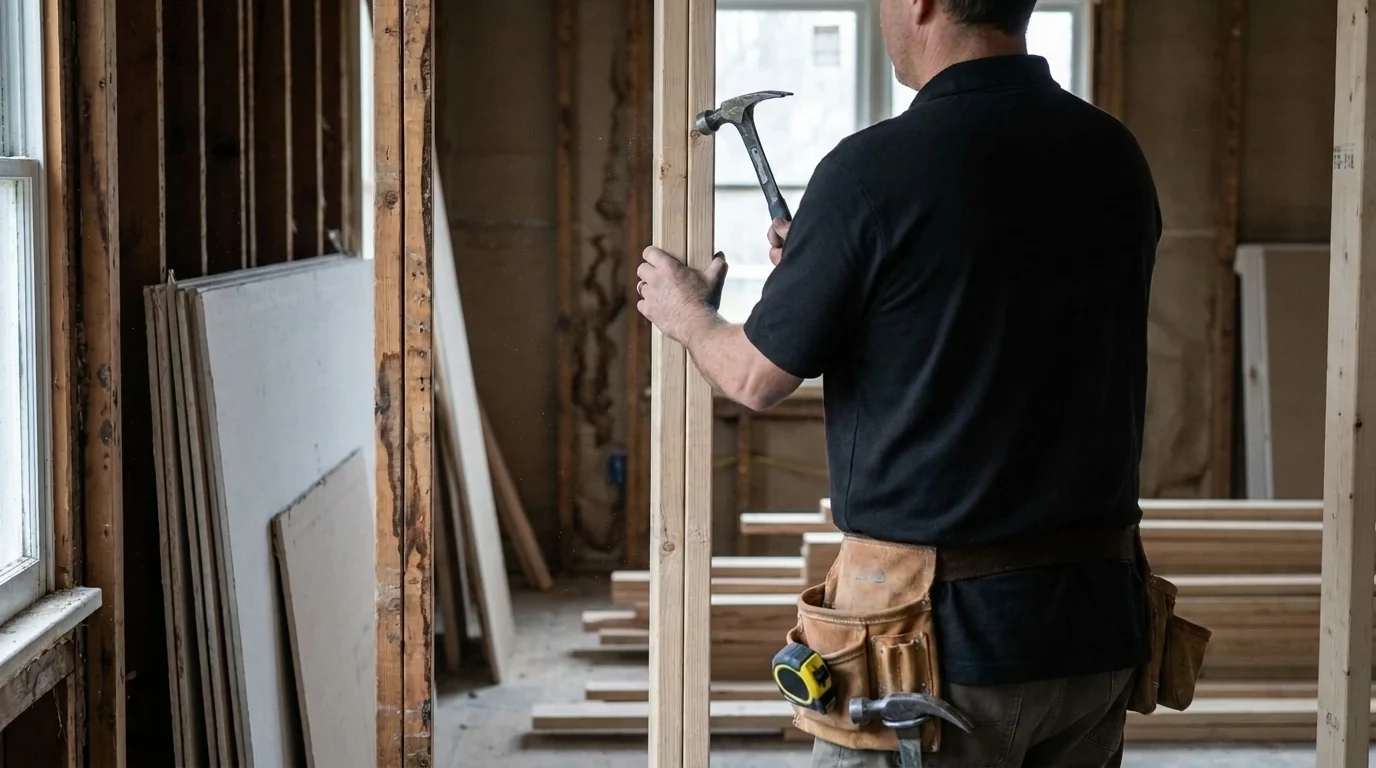
General contracting after a loss covers everything needed to restore a space from exposed studs or a demolished room back to finished condition: framing repairs, insulation, drywall, flooring, paint, trim, cabinetry, and fixture reinstallation. It’s distinct from the mitigation work (drying, demolition, sanitizing) that typically happens first.
In a typical Woodbridge job, this might mean reframing a section of wall after a burst pipe soaked the studs, replacing subfloor in a basement after sewage backup, or rebuilding a bathroom after a slow leak caused enough damage that tile and drywall both had to come out. A good contractor sequences this so inspections happen at the right stage, insulation before drywall, rough plumbing and electrical signed off before the walls close up.
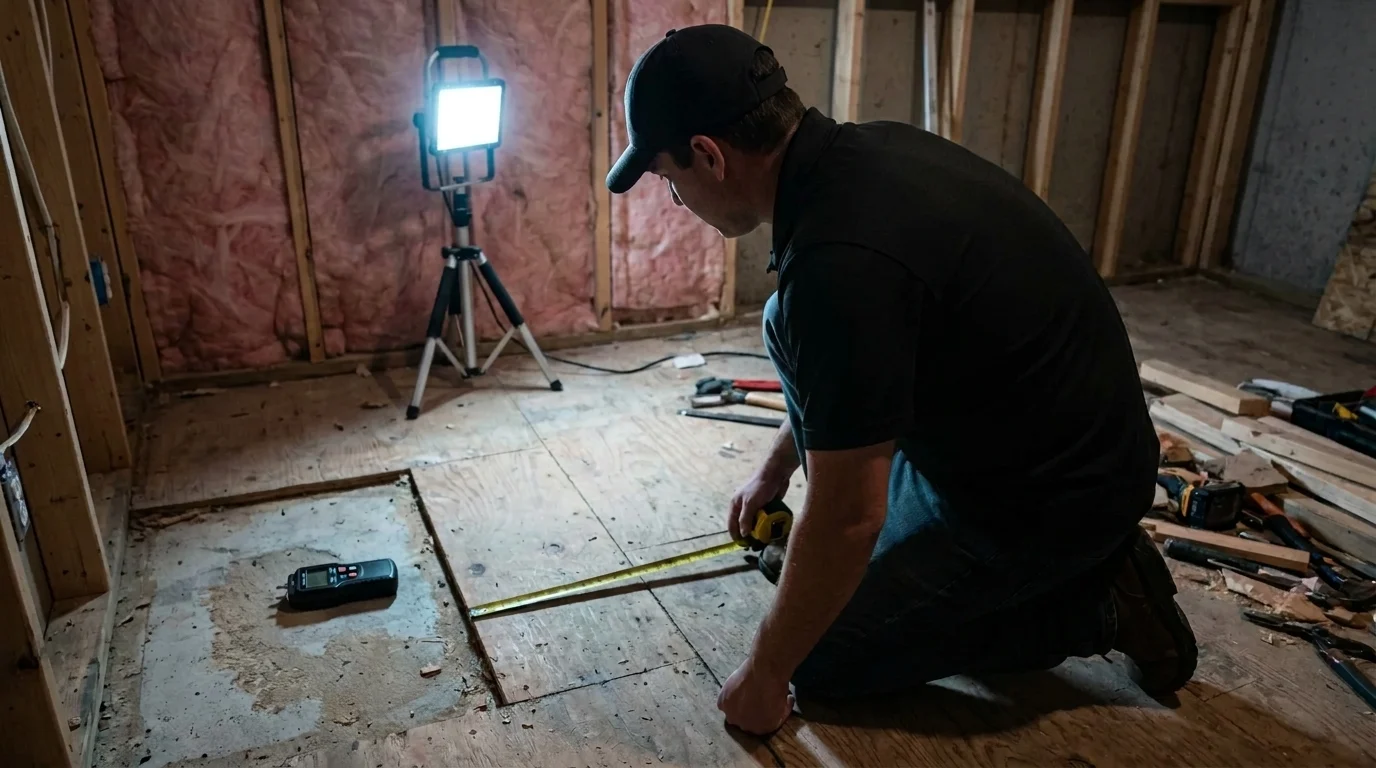
The advantage of using one company for both mitigation and reconstruction is documentation continuity. The same team that measured moisture content and photographed the damage on day one is the team scoping the rebuild, which matters when an adjuster asks why a wall was opened up three feet past the visible stain.
What’s the difference between reconstruction and a standard renovation?
Reconstruction restores a space to its pre-loss condition and is usually driven by an insurance claim; a standard renovation is a discretionary upgrade with no damage behind it. The contracts, the documentation, and often the permitting requirements differ even when the physical work looks similar.
Reconstruction scopes are built from an adjuster’s estimate (often an Xactimate report) and need to match what the policy covers, like-kind-and-quality materials, not necessarily an upgrade. If a homeowner in Dale City wants to bump the kitchen from laminate counters to quartz while the room is already torn out, that’s a renovation decision layered on top of the reconstruction, and it’s billed separately from the insurance scope.
Permitting also differs by scope size. Prince William County requires permits for structural work, electrical, and plumbing regardless of whether the job started as a renovation or a damage repair; cosmetic-only work (paint, flooring replacement without subfloor changes) usually doesn’t trigger one. A contractor who’s done reconstruction work locally should know which Woodbridge-area jobs need a permit pulled before drywall goes back up, not after.
What should you check before hiring a contractor for a reconstruction job?
Before signing anything, confirm the contractor holds an active Virginia contractor license through the Department of Professional and Occupational Regulation, carries general liability insurance, and will put the scope of work in writing before starting. Verbal estimates and handshake deals are where reconstruction projects go wrong.
A few specific things worth checking: does the written scope list materials by brand and grade, not just “replace flooring”? Does the contractor coordinate directly with your insurance adjuster, or leave you as the go-between? And does the same company that did demolition and drying also do the rebuild, or are you now hiring a second, unrelated crew that has to interpret someone else’s moisture readings secondhand?
The most common mistake homeowners make is hiring based on who can start fastest rather than who documents best. A contractor who skips the written scope or can’t produce proof of insurance is also the one most likely to leave a gap between what your policy paid for and what actually gets built. For more on vetting a company for this kind of work, see How To Choose a Restoration Company in Woodbridge.
What should you do next to get a reconstruction project started?
Start by getting a written scope of work that matches your insurance estimate line by line, then confirm which permits the job needs before any drywall goes back up. If mitigation already happened, ask that contractor directly whether they also handle the rebuild, it saves a handoff and a second round of estimates.
If you’re still early in a claim and unsure what your policy actually covers for rebuild costs, Does Homeowners Insurance Cover Water Damage? walks through how coverage typically splits between mitigation and reconstruction. Drying standards for the mitigation phase generally follow the IICRC S500 water damage restoration standard, worth asking about if your project started with a water loss.
If you’re ready to move from demolition to rebuild, request a written scope before the next phase starts. Call 24/7 restoration Inc at (703) 727-0385 to schedule a reconstruction estimate for a Woodbridge-area property.
Rebuilding after a loss is slower when it’s handled piecemeal, one crew for drying, another for demo, a third for the rebuild. Keeping the documentation consistent from the first moisture reading to the final coat of paint is what keeps a reconstruction project on schedule and the claim paid correctly.
About 24/7 restoration Inc
This is an IICRC Certified Firm licensed in Virginia (license #2705199581), serving Woodbridge and surrounding Prince William County communities including Lake Ridge, Dale City, and Dumfries. Its crews hold IICRC WRT (water) and AMRT (mold) certifications, are OSHA trained, and carry EPA Lead-Safe certification. The company handles general contracting, reconstruction, sewage cleanup, and water damage restoration, and operates on a 24/7 emergency basis, currently rated 5.0 on Google across 59 reviews.