TL;DR: For a flooded Woodbridge basement, call a water damage restoration company first if water is still spreading or standing on the floor. Call a plumber first only if the leak source is visible, reachable, and still running. Shut off power to the basement circuit before anyone steps into the water, and start extraction within 24 to 48 hours to keep drywall and framing from growing mold.
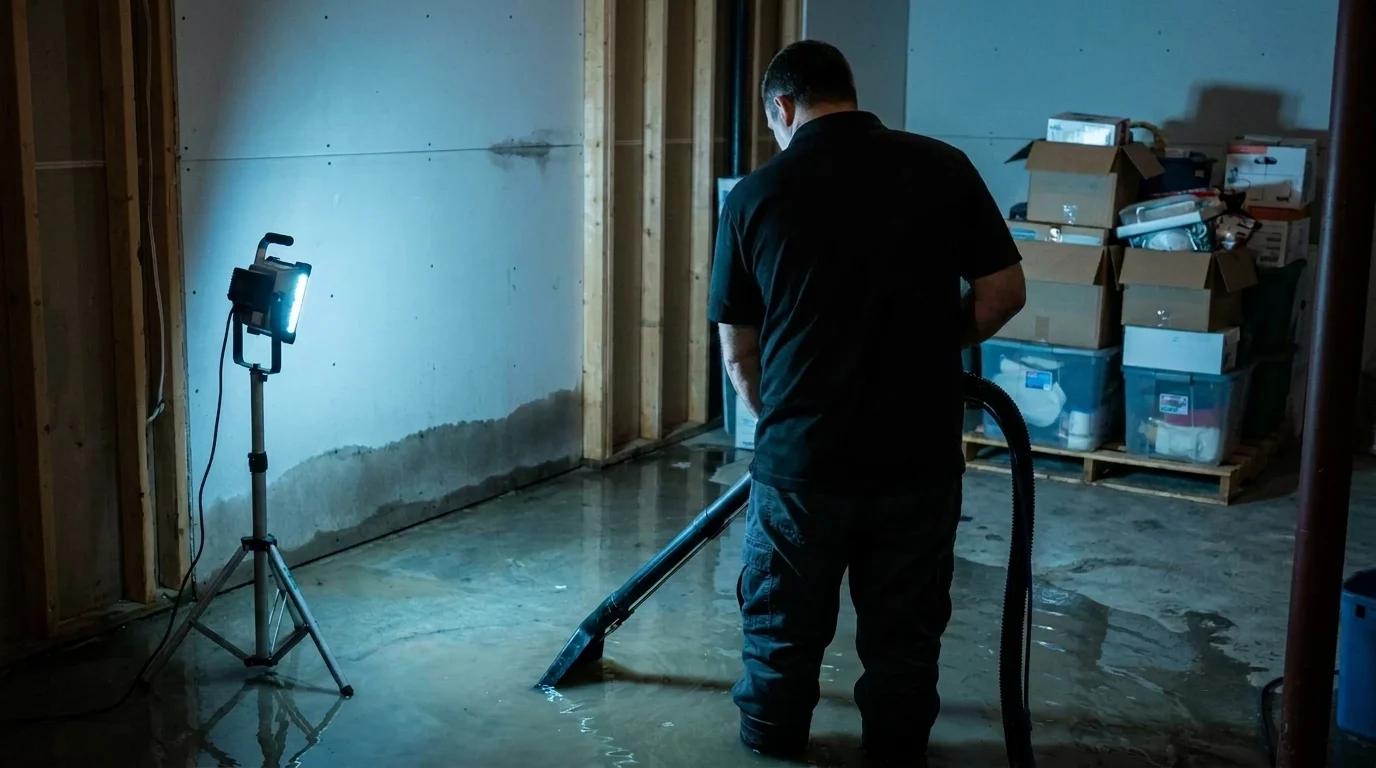
If you just walked downstairs in Lake Ridge, Dale City, or anywhere near the Occoquan River floodplain and found water across the floor, the next ten minutes matter more than the next ten phone calls. Northern Virginia’s clay-heavy soil and high water table mean basements here flood fast and from more than one direction: a failed sump pump, a split water heater line, a sewer backup, or groundwater pushing through a foundation crack after heavy rain. Who you call first depends entirely on where the water is coming from.
Who do you call first for a flooded basement in Woodbridge?
Call a water damage restoration company first if the water is still rising, already covers the floor, or has been sitting for more than an hour. Call 24/7 restoration Inc at (703) 727-0385 and a crew can start extraction and set up drying equipment the same day; the company holds a 5.0-star Google rating from 60 local reviews and runs IICRC-certified technicians around the clock.
Call a plumber first only when the source is a visible, reachable, still-running leak, like a burst supply line under a laundry sink you can shut off at the valve. Once the water is off, the next call is still a restoration crew, because standing water and wet drywall don’t dry themselves.
Sump pump failure: who handles it?
A sump pump failure during a storm is a restoration call, not a plumbing call, because the problem now is standing water, not the pump itself. Pumps fail from power loss, a stuck float switch, or a motor that simply wore out, and by the time you notice, there’s usually already an inch or more of water on the slab.
If the power is out, a backup battery or water-powered backup pump is worth asking a plumber about once the immediate flooding is handled. But the water on the floor needs extraction and drying equipment first. Leaving it even overnight lets water wick up drywall and insulation well above the visible waterline.
Water heater leak flooded the basement: who handles it?
Shut off the water supply valve and the gas or electric power to the unit first; that part is a quick, safe DIY step if the valve is reachable without standing in water. A plumber replaces or repairs the water heater itself.
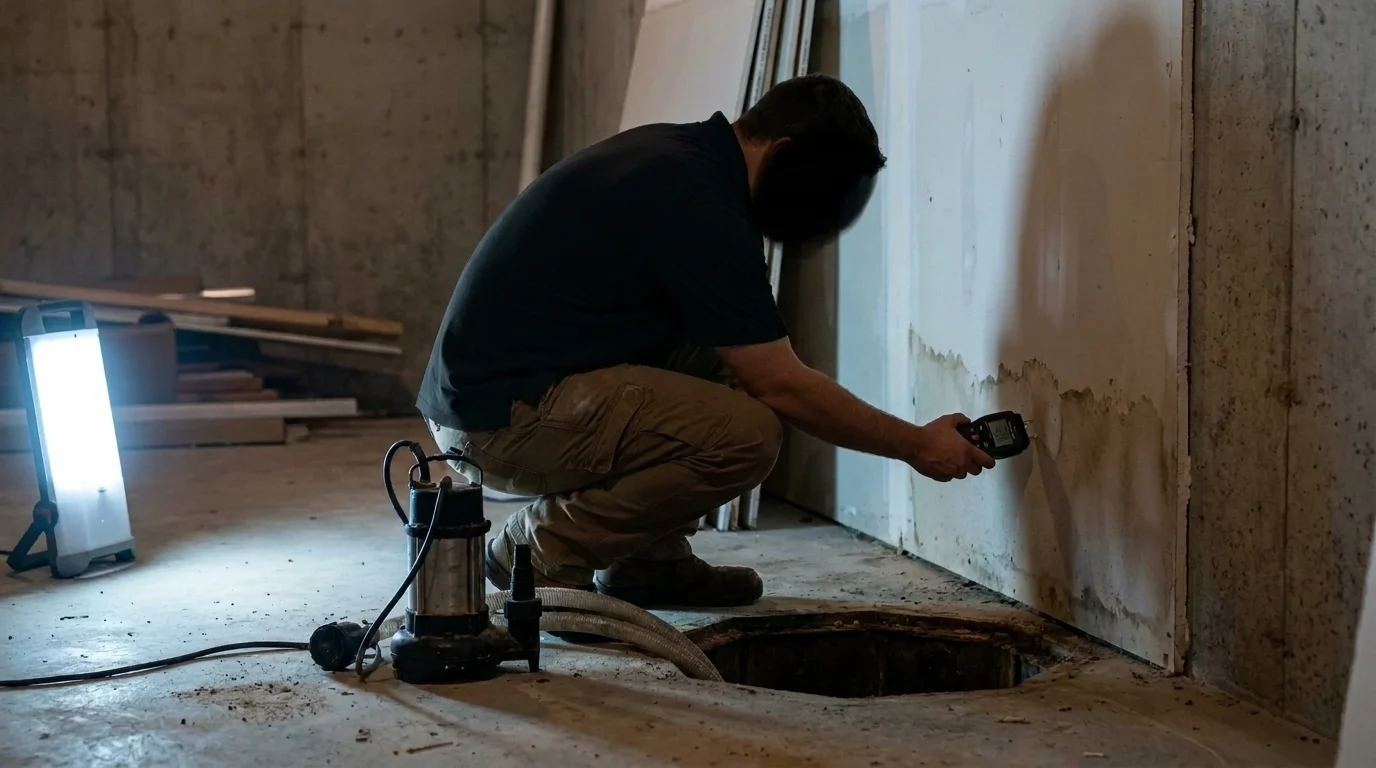
The flooding it left behind is a separate job. Water heater tanks hold 40 to 50 gallons, and a failed tank or burst line can release that fast enough to soak carpet pad, baseboards, and anything stored on the floor before anyone notices. That part calls for extraction, moisture mapping, and structural drying under the ANSI/IICRC S500 standard, the industry benchmark for water damage restoration.
What do you do in the first 30 to 60 minutes?
Shut off power to the basement circuit at the breaker before anyone walks into standing water, since electrical outlets and extension cords near water are a shock hazard. Do this even if the lights still look fine.
After that: move anything salvageable off the floor, photograph the water level and any damaged belongings for the insurance claim, and avoid using a household shop vac on more than an inch or two of water (it’s not built for it and can overheat). If the water touched a sewer line or came up through a floor drain, treat it as contaminated and stay out until a professional assesses it. The EPA’s guidance on flooded homes covers safe cleanup basics if you’re waiting on a callback.
Our guide on the first 24 hours after water damage walks through the full checklist if you want more detail while you wait for a crew.
When do you call your insurance company?
Report the loss to your insurer promptly, ideally the same day. You don’t have to wait for mitigation to start, and the restoration crew’s moisture readings and photos will support the claim. Most standard homeowners policies cover sudden water damage, like a burst pipe or failed appliance, but exclude gradual leaks. Groundwater or surface flooding needs a separate flood policy (NFIP or private), and sewer backups or sump pump failures are covered only if you’ve added a water backup endorsement.
A restoration crew’s moisture readings, photos, and drying log become part of the documentation your adjuster needs, which is why starting extraction quickly protects the claim as much as the structure. Our breakdown on whether homeowners insurance covers water damage goes deeper into what’s typically covered versus excluded.
A flooded basement rarely has one clean cause, and figuring out whether you need a plumber, a restoration crew, or both at once is the hardest part of the first hour. When in doubt, call the restoration company: they can tell you over the phone whether a plumber needs to come first.
About 24/7 restoration Inc
24/7 restoration Inc is an IICRC Certified Firm based in Woodbridge, Virginia (license #2705199581), offering 24/7 emergency response. The company’s crews handle water cleanup, water damage restoration, sewage cleanup, and reconstruction across Woodbridge, Lake Ridge, Dale City, and the greater Northern Virginia area, holding a 5.0-star Google rating from 60 local reviews.